Day 54 of 60 | Bonjour, Paris! 🇫🇷✨
Today Lori and I crossed into a new phase of culinary school: the “we now have to talk about our food like adults” portion of the program.
Turns out cooking is only half the battle - the other half is standing in front of two master chefs and describing your dishes without sweating through your chef coat or accidentally slipping into interpretive dance.
In addition to creating, sourcing, prepping, cooking, and plating our meal for two judges, we will also be expected to present our theme and describe each dish.
Below is the script we’ll be using, assuming it is understood in at least one language in the room. We will be printing out a menu in French just in case.
FINAL EXAM PRESENTATION SCRIPT
“Bonjour Chefs. Our final exam menu is built around a simple theme:
A Winter Progression in Four Courses — Earth, Garden, Sea, and Land.
We wanted to create a menu that respects seasonality, focuses on clean and honest flavors, and follows the spirit of Alain Ducasse: highlighting the natural taste of each ingredient with minimal transformation.”
Dish 1 — Cold Starter
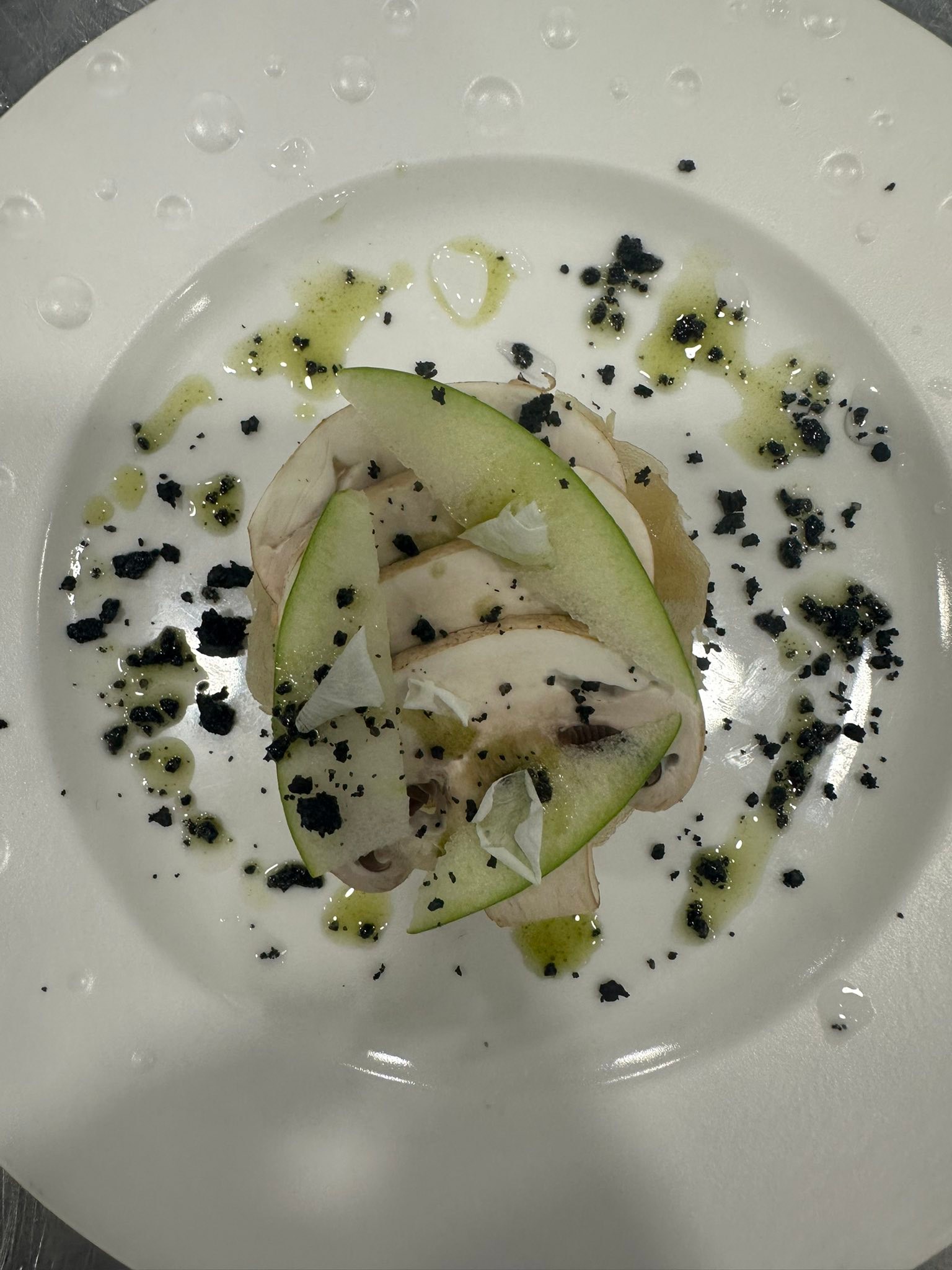
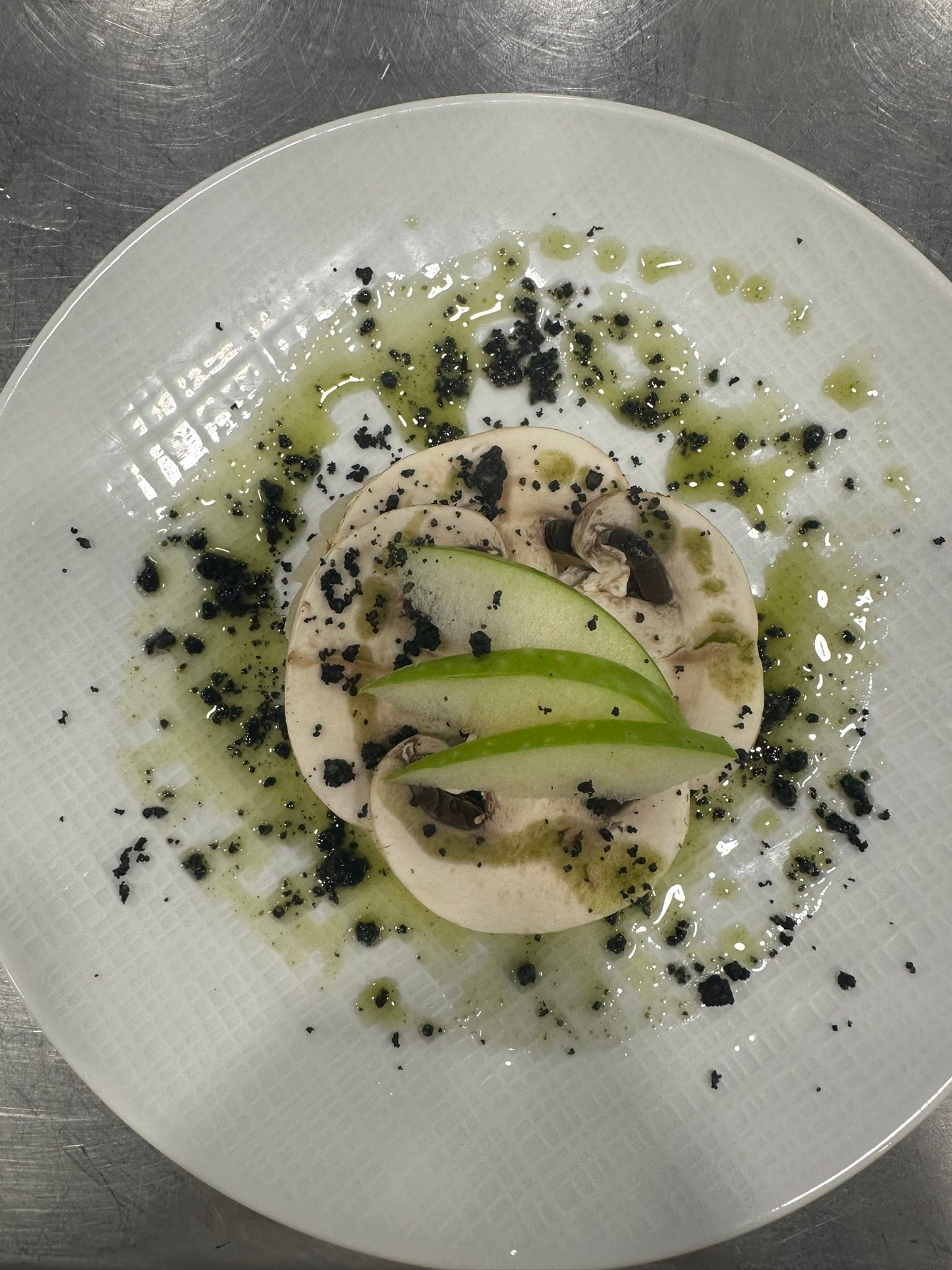
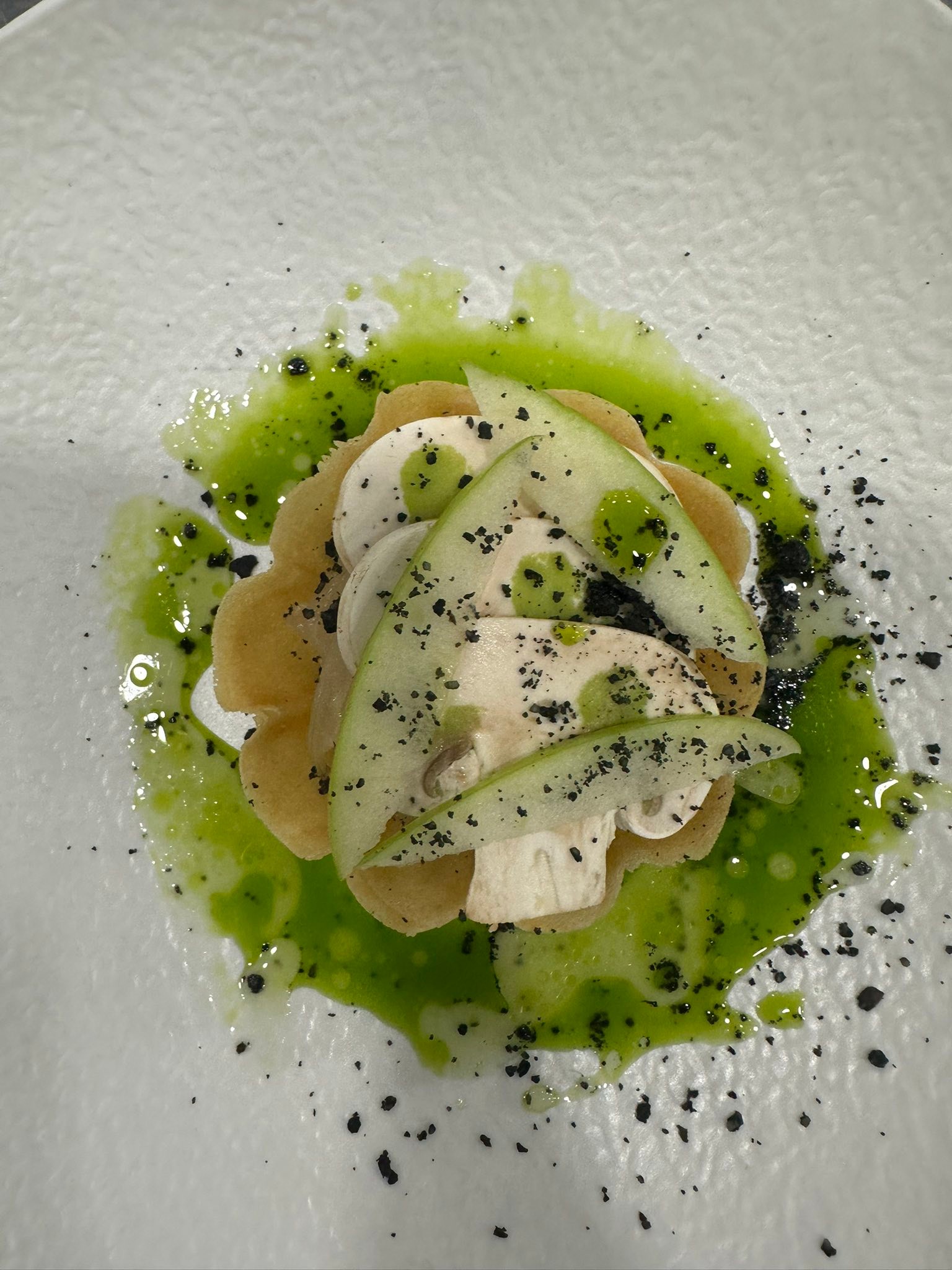
“For the first course, Earth, we prepared a brique tartelette with mushroom and onion. The idea was to start with something light, crisp, and aromatic, using winter mushrooms and slow-cooked onion to bring depth. The Granny Smith, pine nuts, and basil oil add freshness and texture while keeping the flavors very natural and vegetal.”
Dish 2 — Hot Vegetarian Dish
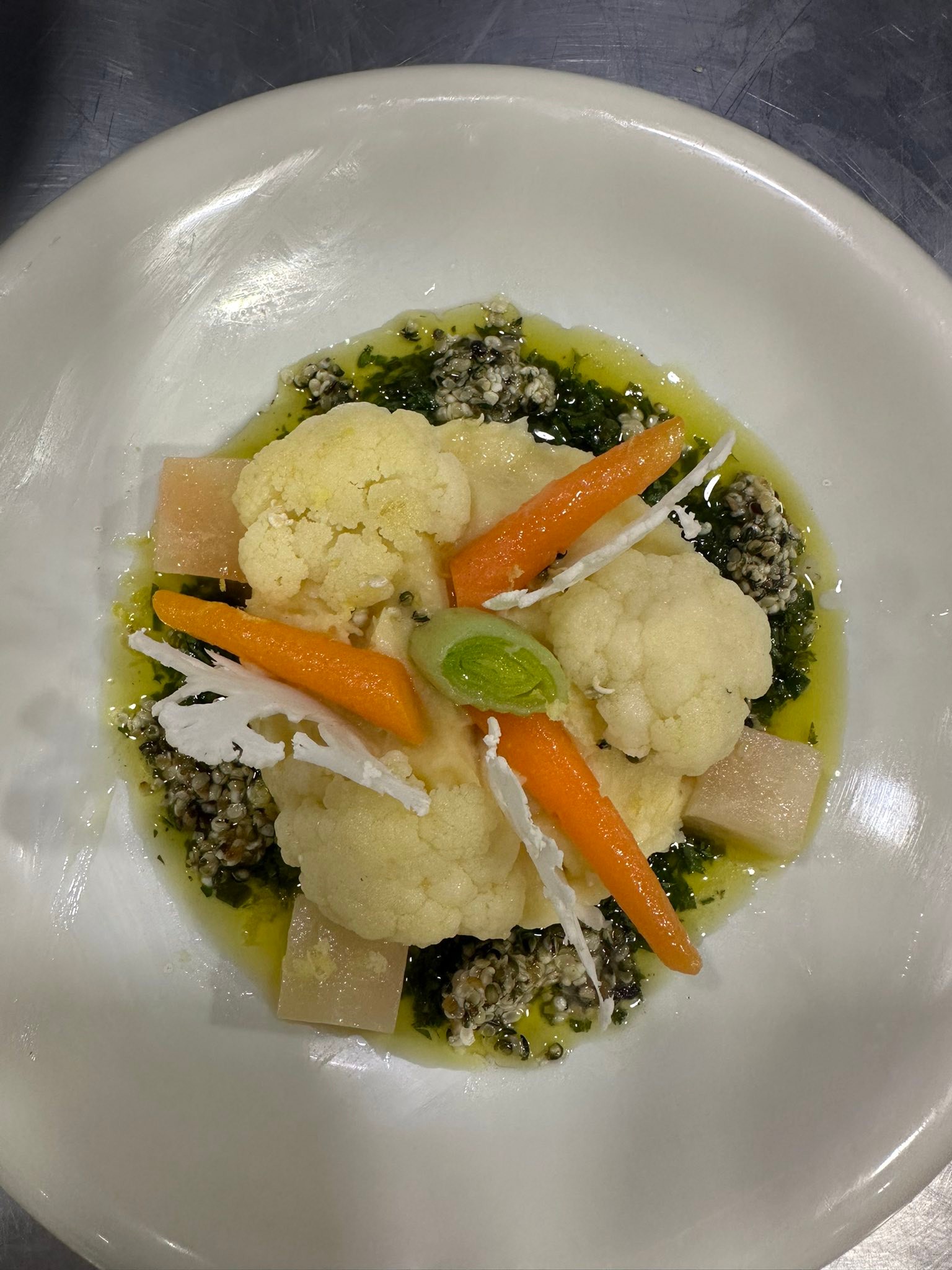
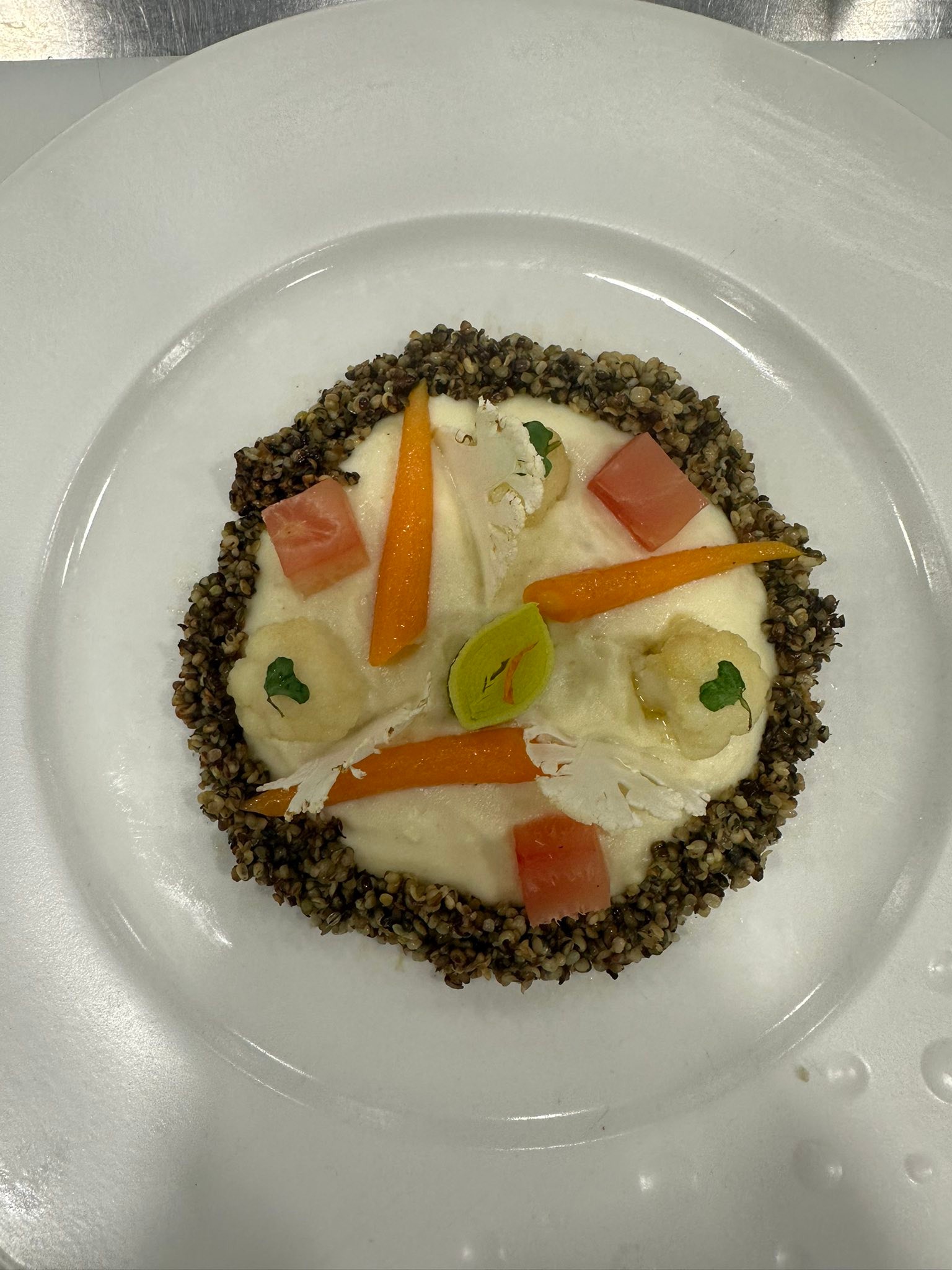
“The second course, Garden, is a winter vegetable mosaic served with celeriac purée, citrus gel, herb vinaigrette, and a hempseed gratin for vegetable protein. This dish represents the winter garden: colorful, structured, simple in appearance but with precise cooking for each vegetable. It’s inspired by the modern vegetable-forward approach in the Ducasse kitchens.”
Dish 3 — Hot Fish Dish
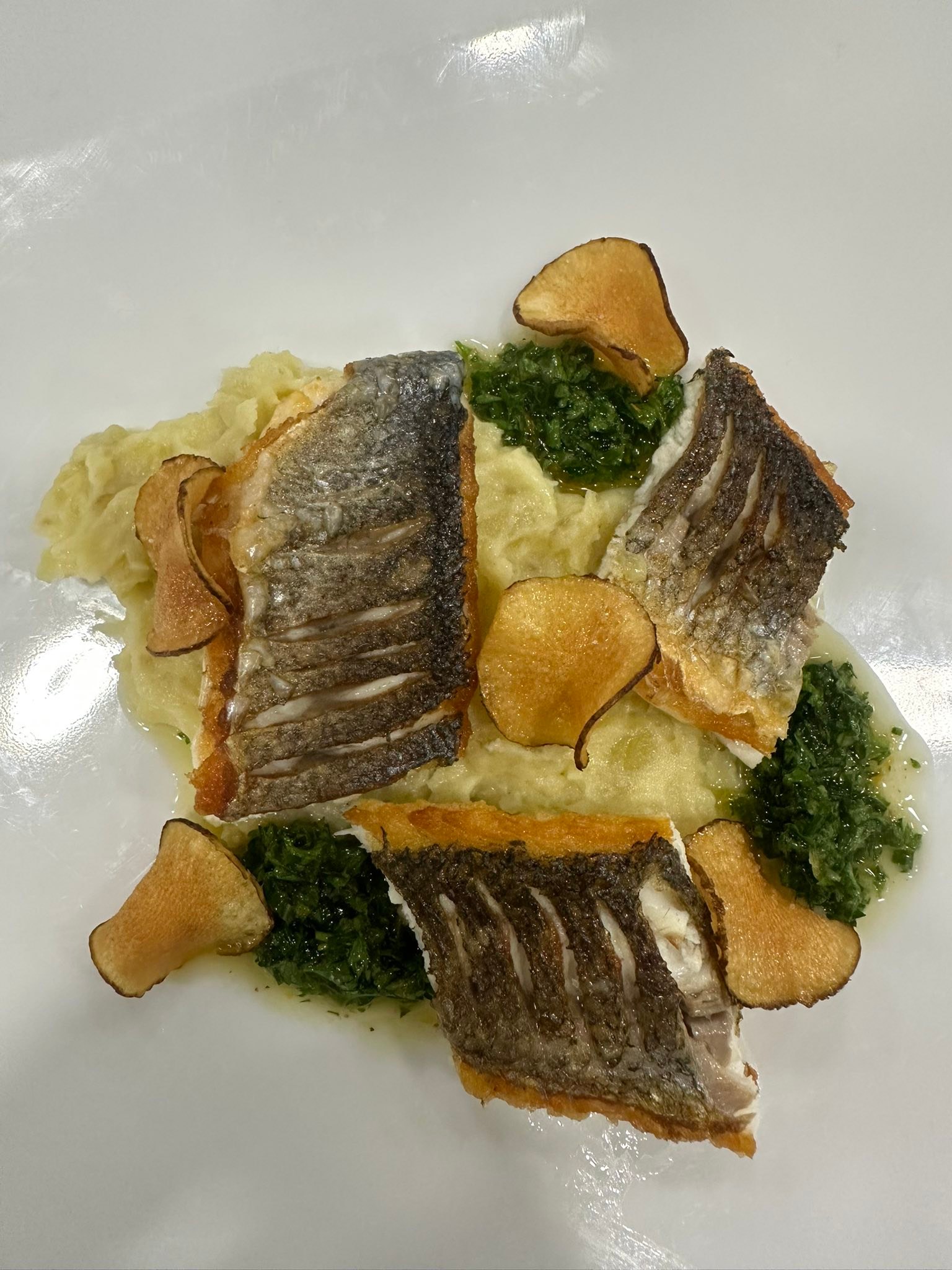
“The third course, Sea, is seabass with a parsnip purée, Jerusalem articoke chips, and a three-citrus chimichurri. The goal was to balance richness, freshness, and acidity. The chimichurri brings brightness, the topinambour adds a winter note, and the dish stays clean and light while highlighting the natural flavor of the fish.”
Dish 4 — Hot Meat Dish
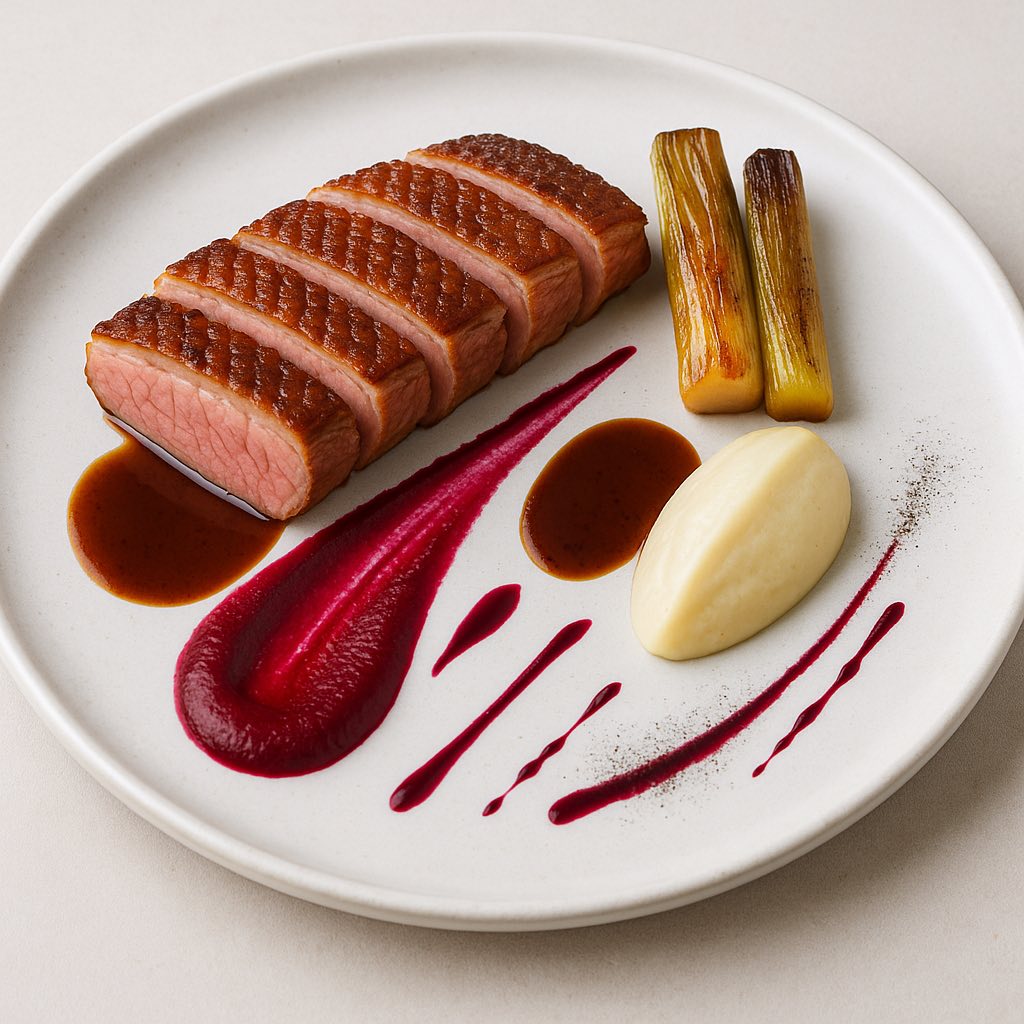
“The final course, Land, is duck breast with potato purée, beet reduction, finished with a micro-gastrique, duck jus, and braised leeks. Duck, beet, and parsnip are classic winter combinations, but we added acidity to create balance and avoid excess sweetness. The braised leeks bring a savory note and complete the dish with a simple but essential winter vegetable.”
Closing Sentence
“Overall, our intention was to create a coherent winter menu that follows the Ducasse philosophy: respect for the product, clarity of flavor, precision of technique, and elegant but restrained presentation. Merci, Chefs.”